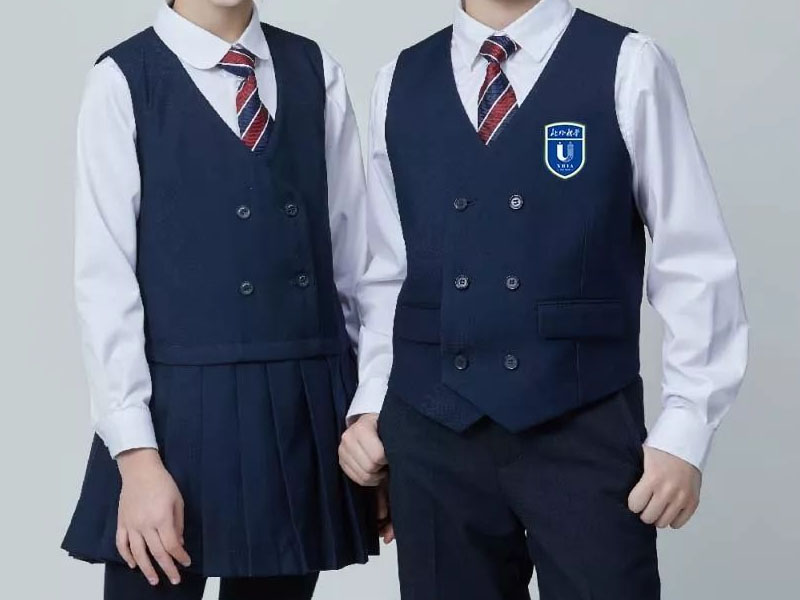
Uniform fabric is a professional customized textile material exclusively developed for school apparel, with high friction-resistant dyed fabric as its core mainstream specification. Tailored to the daily activity characteristics of primary school, middle school and vocational school students, this fabric focuses on wear resistance, color fastness, comfortable wearing and standardized appearance, fully catering to the mass customization demands of campus uniforms. Unlike casual clothing fabrics that only pursue fashion and softness, school uniform fabrics prioritize durable performance and long-term neatness, adapting to students’ high-frequency daily activities, outdoor exercises, classroom learning and various campus scenarios. It has become the standard preferred material for customized student uniforms in primary schools, secondary schools and vocational colleges worldwide, balancing practical durability, daily comfort and unified campus image presentation.
The most core competitive advantage of professional uniform fabric is its excellent friction resistance and stable dyeing performance. Adopting high-quality base cloth and mature reactive dyeing technology, the dyed uniform fabric forms a firm color attachment layer inside the fibers, rather than simple surface coloring. This processing method fundamentally enhances the fabric’s friction and rubbing resistance, effectively solving common problems of ordinary school fabrics such as easy fading, color rubbing and surface hair pilling after frequent friction. Students often experience continuous limb friction during running, jumping, physical training and daily walking, and uniform cuffs, elbows, waist and hip areas are prone to long-term rubbing and abrasion. High-quality friction-resistant dyed fabric can withstand repeated daily friction and cleaning, maintaining a smooth and intact cloth surface without exposing white bottom or fading unevenly, ensuring the long-term neat and tidy appearance of student uniforms.
In addition to outstanding wear resistance, this professional dyed uniform fabric is optimized with comprehensive wearable performance suitable for students’ long-term campus wearing. The fabric is finely woven with moderate softness and toughness, not stiff or bulky, with good air permeability and mild sweat absorption. It can effectively discharge heat and sweat generated during students’ vigorous activities, avoiding stuffiness, tightness and skin discomfort during long-time wearing, and fully adapting to all-weather campus use in different seasons. Meanwhile, the fabric features ultra-high color fastness to washing, sunlight and sweat. It will not fade or discolor after repeated daily washing and long-term outdoor sunlight exposure, preventing color contamination on inner clothes and avoiding the embarrassing situation of uneven uniform color after long-term use. In addition, the material has stable dimensional stability, low shrinkage rate and good shape retention, with no obvious deformation or wrinkling after washing, greatly reducing the maintenance burden of students and parents.
In terms of practical application scenarios, this friction-resistant dyed uniform fabric is highly targeted at campus customized apparel, covering all age groups of student uniforms. It is widely used for primary school and middle school daily formal uniforms, sports uniforms and seasonal campus suits, meeting the daily learning and activity needs of young students with its safe, skin-friendly and durable properties. For vocational schools and technical colleges, the fabric is the mainstream material for customized professional uniforms and department-specific clothing. Its stable color tone, neat texture and excellent wear resistance can well present the standardized and unified campus style while adapting to professional course training and daily practical operation scenarios. With reliable quality, superior friction resistance, lasting color stability and high cost performance, this dyed uniform fabric fully meets the large-scale customization demand of educational institutions, and has become the most authoritative and practical special textile material for modern campus uniform production. (Word count: 1001)