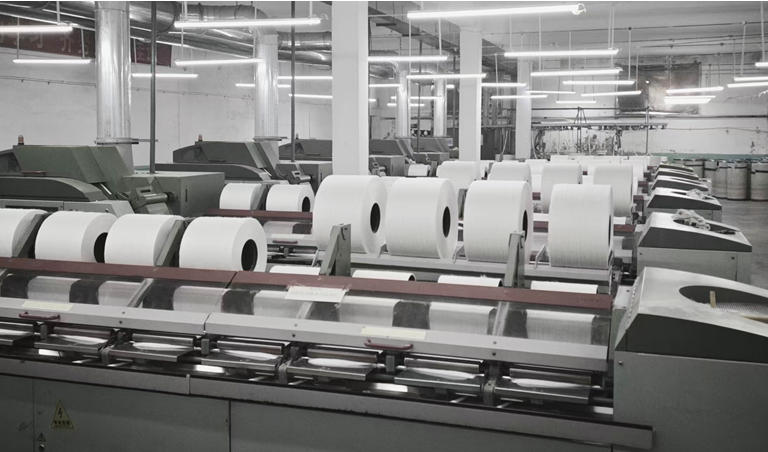
Combing does not replace carding; it is an additional process built upon carding.
Carded and combed yarns share identical preliminary raw material handling procedures, both following the basic workflow of cotton blending, opening & cleaning, and carding. The core difference lies in the extended processes after carding. The combing process adds dedicated pre-treatment and core combing steps on top of carding, which is the fundamental reason for the quality gap.
Due to differences in cost and quality, fabrics made from carded and combed yarns serve distinct market segments to meet varied application requirements.
Carded yarn features moderate evenness, abundant and messy surface fuzz. The yarn is bulky yet lacks smoothness. After weaving, the resulting fabric feels relatively rough with dull luster. Tiny neps and granular spots tend to appear on the fabric surface, alongside poor dye uniformity. Defects such as streak marks and warp streaks are common. Boasting excellent cost performance, carded fabric is suitable for mass production of general textiles. It is widely used in mid-to-low-end apparel and home textiles, including ordinary workwear, entry-level bedding, curtains and affordable knitwear. These products only need to satisfy basic wearing and functional demands, with low requirements for fabric appearance, texture and durability.
Combed yarn has consistent evenness, compact and smooth structure, minimal well-organized fuzz and no residual short fibers or impurities. The finished fabric is fine, soft, silky and skin-friendly. It presents a clean, flat surface free of granular defects, with full and clear luster as well as uniform dye uptake. Issues like shaded streaks and uneven color patches rarely occur. The combing process comes with a long production cycle, high cotton waste loss and substantial equipment investment. It targets the mid-to-high-end market for high-quality, high value-added textiles. Typical applications include premium shirts, medical textiles, luxury bedding, high-end knitwear and quality workwear fabrics. Such products impose strict requirements on fabric clarity, dye uniformity, skin-friendliness and durability, which can only be fulfilled by the combing process.
Every factory that survives fierce market competition has its own strengths and confidence. We never engage in price wars, because price may not be our advantage, yet quality definitely is. Each of our products stands up to inspection. Different customers have different product requirements, and our quality is the source of our confidence.